The layers of the rainforest
The air is thick with moisture, the constant hum of sounds of birds chirping and bugs buzzing, the rustling of leaves while a raccoon is digging for grubs, and a guttural howl of a howler monkey pack sends bone-chilling echoes throughout the canopy. The rainforest has many layers of life, and they are all in danger of being thrown out of balance. The animals that populate the layers of the rainforest are fragile and need our help to live harmoniously with humans.
June 22nd is the planet's rainforest day, the most diverse ecosystem on the planet. Home to more than half of all terrestrial life, Rainforests currently at 1.84 billion hectares, cover 6% of the world. This is a large difference from the rainforest, which historically in the 1800s covered approximately 3 billion hectares, 14% of the planet's terrestrial surface. The rainforests and the animals that live in them are fighting for their life currently. It is our responsibility to be aware of the problems and bring conscious action to help preserve and grow our current rainforests.
Why it matters
● Carbon sink: Even if you live in Greenland or Australia, the vibrant green rainforests of Costa Rica contribute massively to the world's regulation of temperature and carbon monoxide levels. Tropical rainforests perform roughly 60% of the world's land-based photosynthesis, absorbing roughly 1 third of the world's carbon emissions. Without rainforests, carbon emissions would skyrocket to an even more unsustainable level.
● Rain Engines: Rainforests don't just receive rain-they create rain. This process is called evapotranspiration, the trees in the rainforest pump millions of gallons into the atmosphere, where atmospheric rivers carry water across oceans and regulate global weather patterns. Costa Rica's rainforests contribute significantly to rainfall up the pacific coast of north america heavily influencing the monsoon season in north america.
● The Living Pharmacy: If you have taken medicine it is most likely that your medicine came from the rainforest, around 25% of all western medicine is produced from tropical plants from the rainforest.
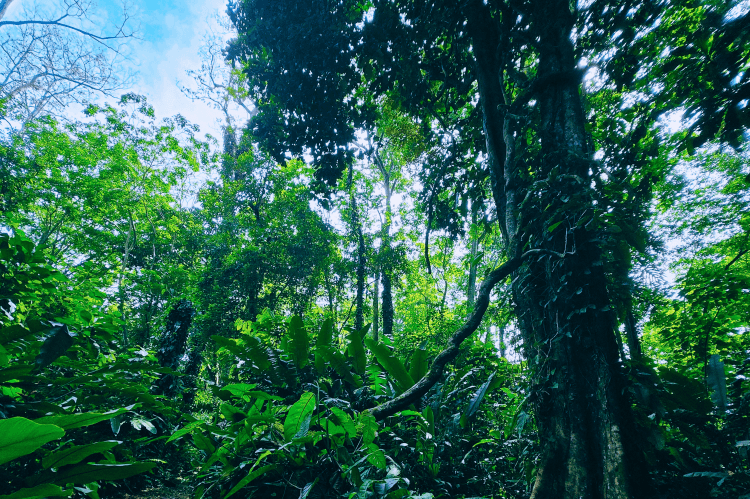
Layers of the rainforest
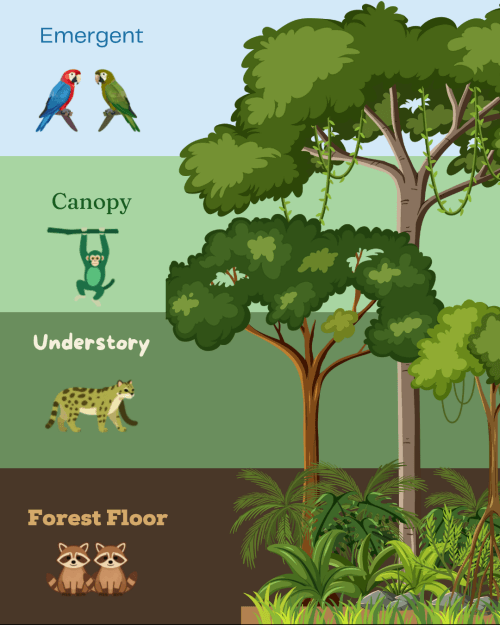
There are 4 layers to a rainforest. The emergent layer, the canopy layer, the understory layer, and the forest floor. Each of these layers plays an important role in a rainforest, housing many different types of animals.
1. The emergent layer- this layer is the highest layer of the rainforest, only the tallest trees break through to this layer enduring intense gusts of wind and scorching sun. This layer is home to a diverse set of animals including macaws, bats, and butterflies.
2. Canopy layer- This layer is 100 feet above off the floor, thick with vines and home to many of the animals in the rainforest. The animals in this layer are some of the favorites including; sloths, monkeys, toucans, and tree frogs. These animals rely on unbroken arborial paths to traverse and forage safely.
3. Understory Layer- Receiving only 2-15% of the sun's light, plants in this layer usually make amazing indoor house plants! This layer is extremely important to predators such as ocelots due to the camouflage potential. This layer is usually the most disturbed from human agricultural expansion, forcing cats into perilous contact with humans.
4. Forest Floor- This dark layer is rapidly changing due to the decomposition and recycling of organic matter. This layer is essential to providing nutrients back into the entire forest web. This layer relies on work from worms, reptiles, insects and even larger animals like tapirs and raccoons.
Our part in saving the ecosystem
The Jaguar Rescue Center is built to care for our world, and tropical rainforests are a vital part of it. Every day, we work tirelessly to protect this ecosystem by rescuing, rehabilitating, and rewilding wildlife.
This is why our Primary Release Station, La Ceiba Primary Release Station, is so important. This untouched primary rainforest is often the final step in an animal's rehabilitation journey before being fully released back into the wild.
Why is protecting this forest so essential? Because conservation is a complete cycle. In order to rescue and rehabilitate animals, they also need a safe and healthy habitat to return to. We don't just care for the animals; we make sure their home is protected as well.
La Ceiba allows us to provide every layer of the rainforest that animals depend on, giving them the opportunity to gradually adapt, regain their natural behaviors, and successfully transition back to life in the wild.
The rainforest is fighting for its future, and we all share the responsibility of helping it survive. As humans, it is our duty not only to protect wildlife but also to preserve the forests that sustain them. By helping the rainforest thrive, we ensure that future generations of animals will always have a place to call home.
How you can help
Here at the Jaguar Rescue Center, we aim to maintain the rainforest ecosystem by helping animals in need. You can help too by raising awareness of this issue and sharing this. You can help by giving donations or telling people about the Jaguar Rescue Center and organizations like it. Bringing conscious awareness to these issues can allow us as people to find more sustainable solutions to our world. The rainforest needs to be saved one sloth, macaw, monkey and tree at a time.
References:
https://ourworldindata.org/deforestation
https://rainforests.mongabay.com/