The Caribbean coastline of Costa Rica is an environment of unmatched beauty, but for sea turtles, it is also a place filled with significant threats. These ancient ocean navigators face constant pressure from poaching, as their eggs, meat, and shells remain highly sought after.
When a sea turtle's shell is cracked or severely damaged, its buoyancy can be compromised. This makes it difficult for the turtle to dive properly to feed, rest, or escape predators, often leaving it vulnerable and struggling at the water's surface.
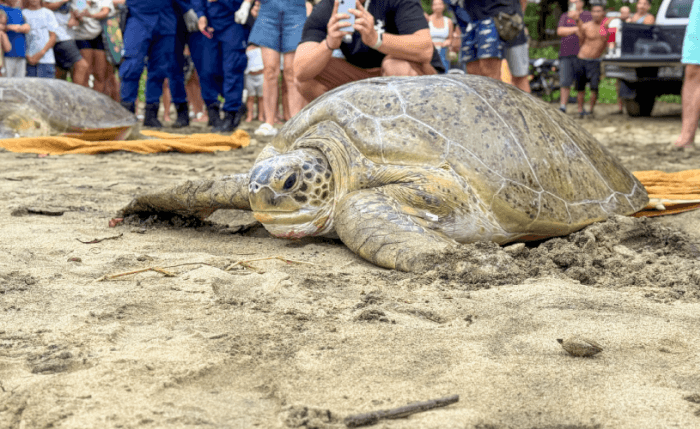
Many of the sea turtles that arrive at the Jaguar Rescue Center (JRC) are rescued through the efforts of the Costa Rican Coast Guard and local police authorities. These agencies frequently confiscate turtles from poachers or respond to reports of injured animals, ensuring they receive the urgent veterinary care and rehabilitation they need before they can be returned to the ocean.
A Remarkable Recovery
This month, the Jaguar Rescue Center celebrates an extraordinary achievement: the rescue, rehabilitation, and release of two green sea turtles (Chelonia mydas) within the same month.
The speed of their recovery stands in contrast to some of the severe cases the center has treated in the past. In 2019, the JRC received Filamena, one of 14 sea turtles admitted during a particularly challenging period. Filomena arrived with a severe open shell fracture that left her unable to swim properly. Because shell and bone tissue require extensive time to heal, her rehabilitation demanded nearly a full year of intensive veterinary care before her successful release in 2020.
Building Better Facilities for Sea Turtles
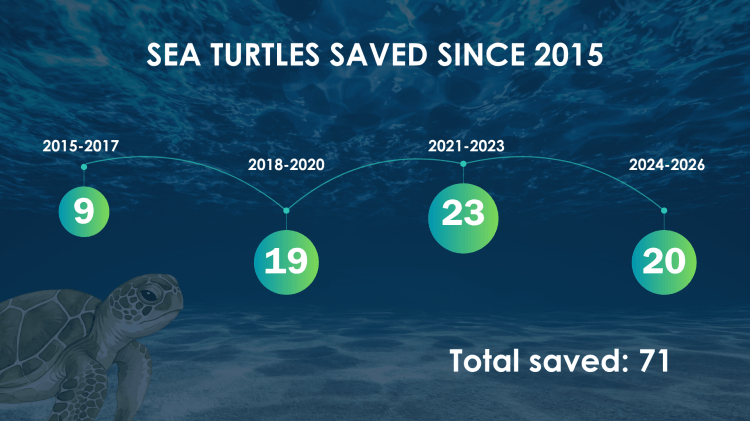
In 2023, the JRC experienced a historic surge in sea turtle rescues, admitting a record 19 turtles in a single year. The unprecedented demand led to a major fundraising campaign that made it possible to construct dedicated treatment pools designed specifically for sea turtles.
These pools provide a constant supply of clean seawater and enough space for patients to regain strength, maintain natural swimming behavior, and recover in conditions that closely resemble their natural habitat.
Preparing for Life Back in the Ocean
Before receiving medical clearance for release, each turtle must successfully complete a series of evaluations conducted by our veterinary team led by Dr. Roger.
- ● Health Assessment: Comprehensive blood tests help ensure there are no lingering infections, metabolic issues, or nutritional deficiencies.
- ● Natural Diet Evaluation: The turtles must demonstrate their ability to forage for and consume natural marine algae. To support this process, the team regularly collects fresh algae from the ocean, replicating the turtles' natural diet as closely as possible.
- ● Swimming and Navigation Test: In the rehabilitation pools, veterinarians observe the turtles' swimming ability, buoyancy control, underwater resting behavior, and overall orientation to ensure they are capable of surviving independently in the wild.
The Challenge of Releasing a Sea Turtle
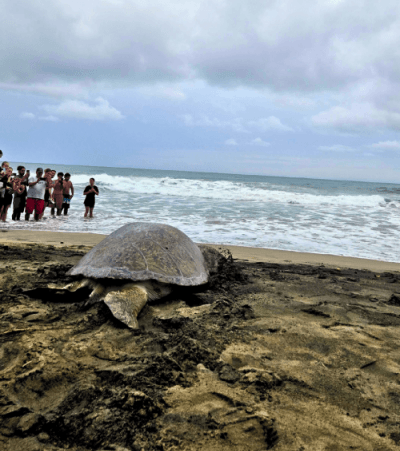
Once the turtles successfully pass all evaluations, the final challenge begins: transporting them back to the ocean.
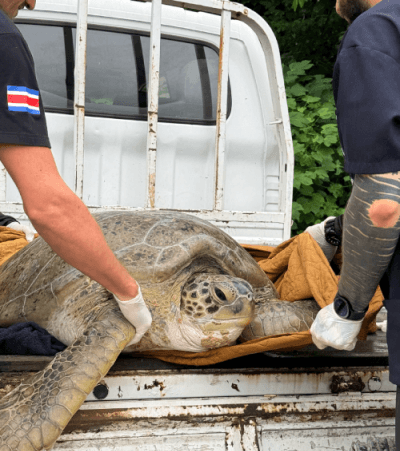
Adult green sea turtles can weigh several hundred pounds, making every release a coordinated effort. Moving a single turtle safely requires a team of four to six people who carefully position the animal on a heavy-duty transport blanket before lifting it into a vehicle for the journey to the beach.
A Community Effort
The final stage of the release is a true community effort involving the Costa Rican Coast Guard, local police, MINAE (the Ministry of Environment and Energy), and Cahuita Turtle Rescue.
Together, these partners provide transportation, logistical support, and the manpower needed to ensure a smooth and safe release. The beach area is cleared of disturbances, creating a peaceful path to the ocean where the turtles can begin their journey home.
71 Sea Turtles Saved and Counting
Since 2015, the Jaguar Rescue Center has rescued and rehabilitated 71 sea turtles in the region, including 67 green sea turtles and 4 hawksbill turtles.
Watching these two latest patients return to the Caribbean Sea in less than thirty days is a powerful reminder of what can be achieved through conservation, collaboration, and community support.
Every successful release represents more than a single life saved—it is another step toward protecting the future of sea turtles along Costa Rica's Caribbean coast.